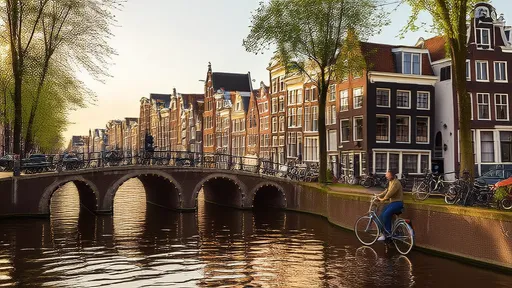
Amsterdam's canals whisper stories of centuries past, their tranquil waters holding secrets of merchant glory and artistic revolution. While tourists flock to capture the iconic bridges and gabled houses, there exists a deeper rhythm to these waterways—a slow, meandering pulse that locals call 'canal leisure'. This isn't merely about sightseeing; it's a philosophy of living that has shaped Amsterdam's soul.
The concept of canal leisure began not as tourism but as necessity. In the 17th century, these waterways were bustling trade routes where speed meant profit. Yet as commerce moved to larger ports, something beautiful emerged: the canals transformed from arteries of urgency to veins of contemplation. The Dutch Golden Age painters captured this transition beautifully—their works show citizens strolling along quays, reading on benches, and simply watching water reflect clouds. Today's canal culture directly descends from this historical shift, where the value of a moment became measured not in guilders but in tranquility.
Modern canal leisure manifests in countless subtle rituals. Early mornings belong to the elderly practicing tai chi on bridge railings, their movements mirroring the gentle sway of moored houseboats. Lunch hours see office workers abandoning desks for canal-side benches, sandwich in one hand and newspaper in the other. The most cherished tradition remains the 'brown cafe crawl'—not bar-hopping but moving between traditional pubs to watch sunlight shift across water surfaces. These establishments strategically place tables where patrons can simultaneously enjoy beer and aquatic reflections.
What few tourists realize is how canal leisure follows seasonal rhythms. Spring brings 'blossom watching' as cherry trees lining canals create pink tunnels. Summer introduces 'floating picnics' where friends rent electric boats to drift for hours. Autumn turns canals into liquid mirrors for falling leaves, while winter transforms them into 'ice socials' when frozen enough for skating. Each season offers distinct ways to engage with the waterways beyond mere photography.
The houseboat culture represents canal leisure's most intimate expression. Approximately 2,500 families call these floating homes their permanent residence. Living on water demands different priorities—there's no rushing when your commute involves untying ropes and navigating narrow passages. Houseboat dwellers become masters of slow living, their days measured by tide changes rather than clock hours. Many maintain small floating gardens or keep chickens in waterfront coops, creating self-sufficient ecosystems along historic quays.
Architecture plays crucial role in facilitating canal leisure. The famous narrow houses with large windows weren't just status symbols—they created visual connections between interior lives and watery landscapes. Traditional 'canal benches' built into bridge abutments provide resting spots precisely where views unfold most dramatically. Even the tilting of old buildings contributes, leaning forward like curious spectators watching the water show below.
Contemporary Amsterdam continues evolving this tradition through urban planning. Recent renovations prioritize 'stay spaces' over transit efficiency, widening quays for seating and adding floating platforms for summer gatherings. The city even employs 'water managers' dedicated to maintaining canal cleanliness not just for environmental reasons but to preserve reflection quality—an often overlooked aspect of visual pleasure.
Canal leisure faces modern challenges nonetheless. Overtourism sometimes turns tranquil spots into crowded photo zones, prompting locals to reclaim their space through 'silent hours' initiatives. Some neighborhoods organize early morning meditation sessions on docks, using the water's calming presence as natural therapy. The city government now designates 'quiet canals' where motorized boats are restricted, preserving acoustic tranquility.
The psychological impact of canal leisure deserves attention. Studies conducted by local universities show measurable stress reduction in people who regularly engage with canals. The combination of flowing water, historic architecture, and slow-paced activity creates what researchers call 'gentle stimulation'—enough engagement to prevent boredom but insufficient to cause anxiety. This may explain why Amsterdam consistently ranks high in European well-being surveys despite its urban density.
Artistic interpretations of canal leisure reveal cultural depths. Beyond the obvious masters like Vermeer, contemporary artists continue exploring the theme. Photographer Jan Dirk van der Burg's series 'Canal Stillness' captures empty chairs awaiting occupants at golden hour. Musician Thomas Azier composed 'Waterlicht'—an electronic piece using hydrophones to record underwater sounds beneath bridges. These works document how canals serve as stages for human contemplation.
For visitors seeking authentic canal leisure, the secret lies in timing and location. The central canals near Dam Square offer spectacle, but the true spirit resides in quieter neighborhoods like Jordaan or Plantage. Dawn and dusk provide optimal conditions, when angled light paints water in metallic hues and the city's noise recedes. The most rewarding approach involves finding a single bench and remaining there long enough to witness the canal's mood changes—from morning delivery boats to afternoon lovers' strolls to evening wine drinkers.
Ultimately, Amsterdam's canal leisure represents a sophisticated urban philosophy. In a world racing toward efficiency, these waterways preserve space for unstructured time. They teach that productivity isn't always measured in output, that a city's wealth can be counted in peaceful moments as much as economic indicators. The canals remind us that water, in its patient flowing, eventually smooths even the roughest stones—including human hearts.
The next time you find yourself beside an Amsterdam canal, resist the urge to quickly photograph and move on. Sit. Watch how light dances between ripples. Observe how houseboat curtains flutter in synchrony with water movement. Notice how conversations soften near liquid edges. In doing so, you participate in centuries of tradition—not as tourist but as temporary custodian of the canal's eternal leisure.
By /Nov 7, 2025
By /Aug 4, 2025
By /Nov 7, 2025
By /Nov 7, 2025
By /Nov 7, 2025
By /Aug 4, 2025
By /Nov 7, 2025

By /Nov 7, 2025

By /Nov 7, 2025
By /Nov 7, 2025

By /Nov 7, 2025
By /Nov 7, 2025
By /Nov 7, 2025
By /Nov 7, 2025
By /Nov 7, 2025
By /Aug 4, 2025

By /Nov 7, 2025
By /Nov 7, 2025
By /Aug 4, 2025
By /Nov 7, 2025
